Light sensitivity, migraines, and eye strain are common visual challenges for many people today. While tinted lenses have long been used to ease discomfort, not all tints serve the same purpose. Two of the most common options are FL-41 lenses and regular tinted lenses. Understanding the differences between them helps you choose the most effective solution for your specific needs.
For Guelph residents who spend time on digital devices, work under artificial light, or experience migraine symptoms, selecting the right tint can make a significant difference in daily visual comfort.
The Purpose of Tinted Lenses
Tinted lenses are designed to reduce the amount and type of light reaching your eyes. They can lower brightness, minimize glare, and improve contrast — all of which help prevent strain and fatigue.
Standard tinted lenses typically provide general relief for bright environments or aesthetic enhancement. However, certain light sensitivities require more targeted support, which is where FL-41 lenses stand apart. They are specifically developed to filter out wavelengths of light most likely to cause discomfort or headaches.
What Are FL-41 Lenses?
FL-41 lenses feature a rose or amber tint engineered to block specific blue-green wavelengths of light. These wavelengths are known to trigger discomfort in individuals with conditions like migraines, photophobia, or post-concussion sensitivity.
Unlike regular tinted lenses, which reduce light evenly across the spectrum, FL-41 lenses selectively filter harmful light frequencies while maintaining overall clarity. This precise filtering makes them a medically recognized solution for reducing neurological light sensitivity.
How Regular Tinted Lenses Work
Regular tinted lenses, such as grey, brown, or green varieties, primarily serve to reduce glare and brightness. They can make outdoor light more comfortable and enhance visual sharpness in different conditions.
For example:
- Grey tints maintain true colour balance while lowering brightness.
- Brown or amber tints increase contrast and are ideal for driving or overcast days.
- Green tints provide balanced light reduction suitable for general outdoor use.
While these lenses improve comfort in bright environments, they do not target specific wavelengths linked to migraines or photophobia.
FL-41 vs Regular Tinting: The Science Behind the Difference
The human eye is sensitive to a range of visible light, but certain wavelengths stimulate stronger neurological responses. High-energy blue light, in particular, has been shown to trigger migraine activity and eye strain in susceptible individuals.
FL-41 lenses are scientifically calibrated to reduce exposure to these triggering wavelengths while keeping the rest of the visual spectrum clear. Regular tinted lenses, in comparison, apply a broad, non-specific filter that lessens overall brightness but does not isolate problematic frequencies.
This difference in precision explains why many patients with light sensitivity find more consistent relief with FL-41 lenses.
Comfort and Visual Performance
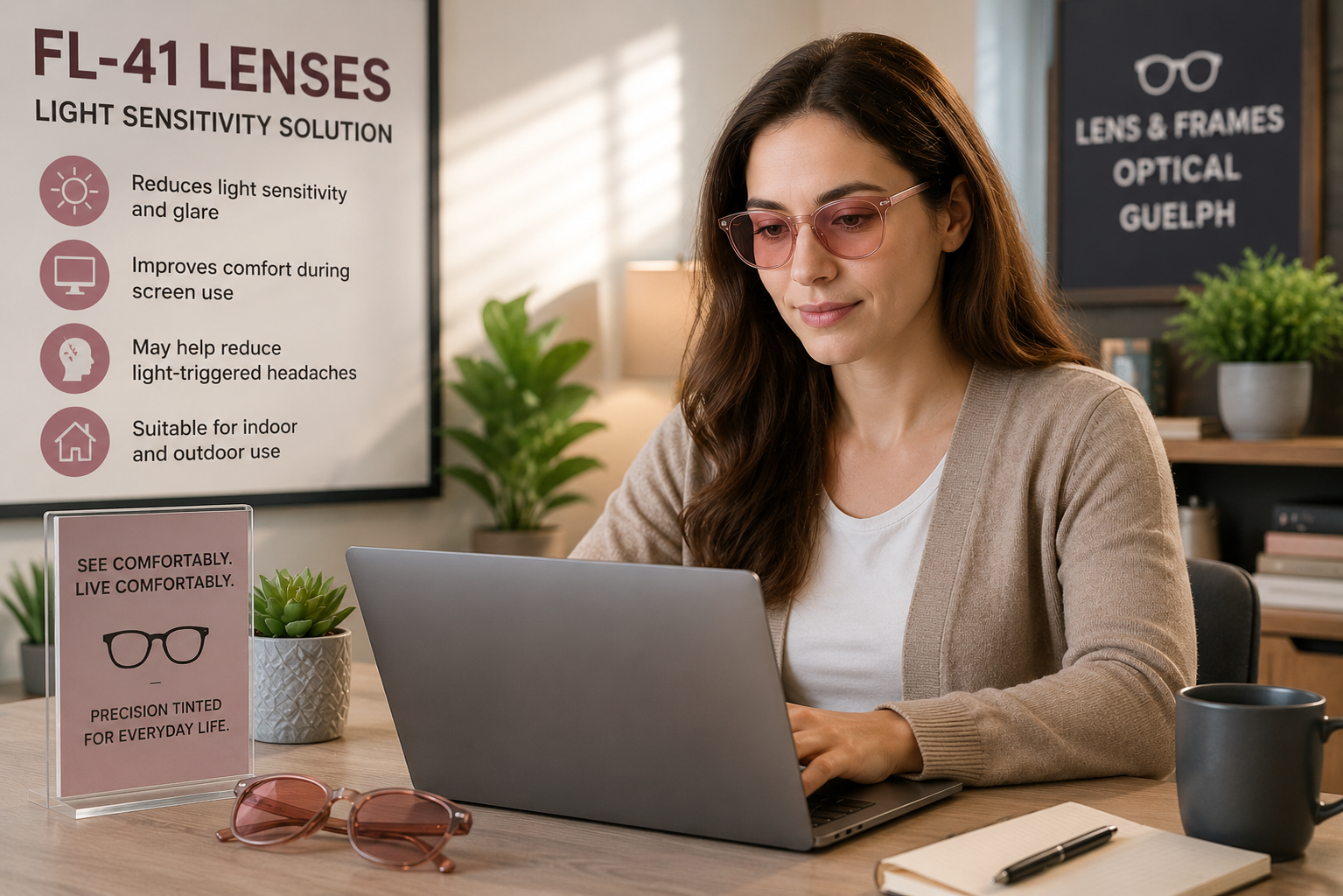
When worn indoors, FL-41 lenses tend to provide a softer visual experience under fluorescent and LED lighting. They make artificial light appear warmer and less intense, easing strain during computer use or long office hours.
Regular tinted lenses, particularly darker shades, may be too dim for indoor environments. They are best suited for outdoor activities where light levels are higher. For those who experience discomfort mainly indoors, FL-41 lenses are typically the more suitable option.
Aesthetic Differences
FL-41 lenses usually have a subtle rose or amber hue that distinguishes them from neutral grey or brown tints. This tint is not purely aesthetic — it reflects the lens’s spectral filtering function. Some wearers prefer lighter versions for a more neutral look, especially for daily use or professional settings.
Modern lens laboratories now offer multiple tint strengths, allowing you to customize the balance between performance and appearance. Regular tints also come in a range of colours, but their variations are primarily cosmetic rather than functional.
Who Should Consider FL-41 Lenses
FL-41 lenses are often recommended for people who:
- Experience frequent migraines triggered by bright or flickering light
- Work under LED or fluorescent lighting
- Spend extensive time using digital screens
- Have post-concussion sensitivity or eye strain
For these conditions, traditional tints may not offer enough relief, as they don’t address the neurological triggers linked to light exposure. FL-41 lenses are designed specifically for comfort under these circumstances, supported by optometric and clinical studies.
When Regular Tinted Lenses Are the Right Choice
If your main concern is glare from sunlight, reflections, or outdoor brightness, regular tinted lenses may be the better fit. They are particularly effective for:
- Driving in bright or overcast conditions
- Outdoor sports or recreation
- Everyday sunlight protection
Many Guelph patients choose grey or brown tints for their balance of clarity and visual accuracy. These lenses are also available with polarization, which further reduces glare from reflective surfaces such as roads or water.
Customizing Your Lens Tint
Your optician can help determine the right tint based on your lifestyle, lighting conditions, and sensitivity level. For example, an individual who spends long hours at a computer in Guelph’s office environments might benefit from FL-41 lenses with an anti-reflective coating.
Meanwhile, someone who drives frequently or enjoys outdoor activities could prefer polarized brown or grey lenses for consistent brightness control. Modern optical labs can fine-tune tint density, coating, and lens material for both functional and aesthetic preferences.
Combining Tints with Additional Features
Both FL-41 and regular tinted lenses can be enhanced with optional coatings and features:
- Anti-reflective coating reduces glare from screens and headlights.
- Scratch-resistant coating prolongs lens life.
- UV protection ensures long-term eye health outdoors.
- Photochromic options allow automatic tint adjustment for variable light.
These add-ons can further improve comfort and durability, ensuring your lenses perform well in a variety of lighting conditions.
Adjusting to FL-41 Lenses
Adapting to FL-41 lenses is generally easy, though a short adjustment period is common. Many users notice reduced light discomfort within a few days. Some report that indoor environments feel warmer or softer in tone, which is a natural effect of the tint.
If you experience continued discomfort or difficulty adjusting, your optician can modify the tint density to achieve a balance that feels more natural.
Long-Term Benefits
Both FL-41 and regular tinted lenses provide lasting advantages when properly chosen. FL-41 lenses can help manage chronic light sensitivity and reduce migraine frequency. Regular tints, on the other hand, promote visual comfort during outdoor or high-glare activities.
For many Guelph residents, having multiple lens types — one for indoor sensitivity and another for outdoor glare — provides the best overall visual protection and flexibility.
Final Thoughts
Choosing between FL-41 and regular tinted lenses depends on how and where you experience visual discomfort. If your light sensitivity is triggered by indoor lighting or screen exposure, FL-41 lenses offer targeted relief. If outdoor brightness or glare is your main concern, traditional tinted lenses are typically sufficient.
An optician can assess your visual habits and recommend the right solution for consistent comfort and clarity throughout the day.
Book a consultation in Guelph to find your ideal tinted lens type.
Lens & Frames Optical – trusted eye care professionals in Guelph.